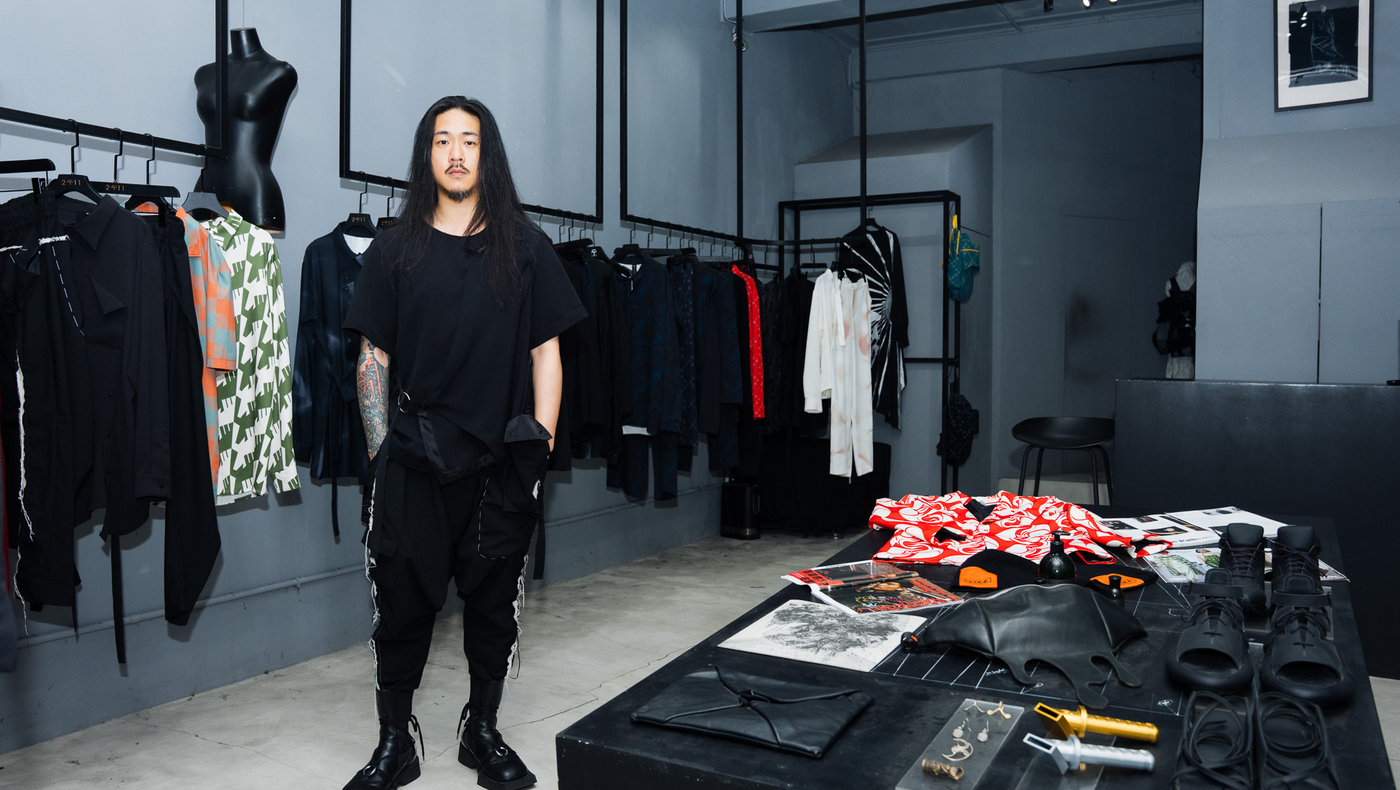
Rooted in Taipei’s Dadaocheng district, near the historic Yongle Market, INFDARK was founded in 2011 by Taiwanese fashion designer Kuo Wei. Quietly growing from a neighborhood shaped by textile commerce and historical memory, the brand has now journeyed through 15 years of development. From Taiwan, INFDARK has gone on to present at New York and London Fashion Weeks, establishing a distinctive and unmistakable design language of its own.
INFDARK takes its name from the French phrase meaning “infinite black.” It carries a dark sensibility, yet it is never merely about the color black. It speaks of culture, yet never stops at symbols. It emphasizes sustainability, yet never reduces the idea to a material label. Instead, the brand begins by rethinking the structure of clothing itself, imagining how a garment can be worn longer, more freely, and in a way that comes closer to the individuality of each wearer.
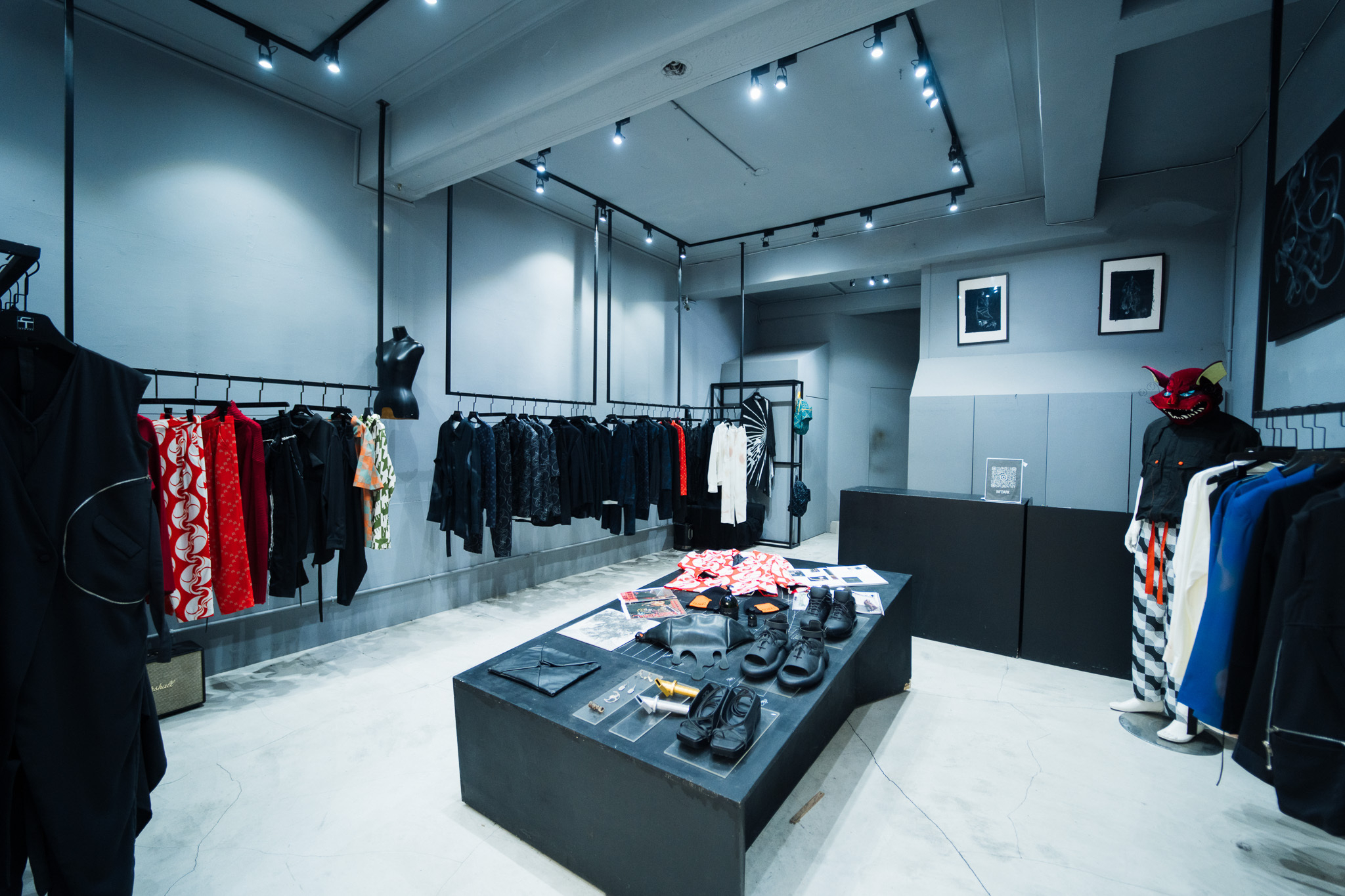
Rooted in Taipei’s Dadaocheng district, INFDARK has built both its studio and retail space in this neighborhood as a base from which to move onto the international stage, developing a singular design language.
Beginning with Storytelling: Letting Clothing Become Narrative
At a time when many were still searching for their future direction, Kuo Wei had already begun to clearly outline his own path. A graduate of the Department of Fashion Design at Shih Chien University, he had already formed the idea of establishing a brand during his junior and senior years.
“At that time, I gradually began to understand that there were already so many different styles, systems, and vocabularies in the world. I also realized that fashion does not have just one standard answer,” he recalls.
The more he came to understand, the more certain he became that he did not want to merely become part of an existing style. Instead, he aspired to respond to the state of the world through his own thinking.
“I want to become a ‘one of a kind’ presence — something irreplaceably unique. I don’t want to make things that are the same as everyone else’s.”
— Designer Kuo Wei
For Kuo Wei, INFDARK is a kind of refuge, as well as a space capable of accommodating all forms of difference. It does not need to restrict anyone through gender, style, or labels, but instead allows people in different states of being to find themselves within it.
“This has never changed,” he says. “It is just that as the brand has developed, we have become increasingly able to realize this concept in clothing through structure, patternmaking, cultural narrative, and sustainable methods.”
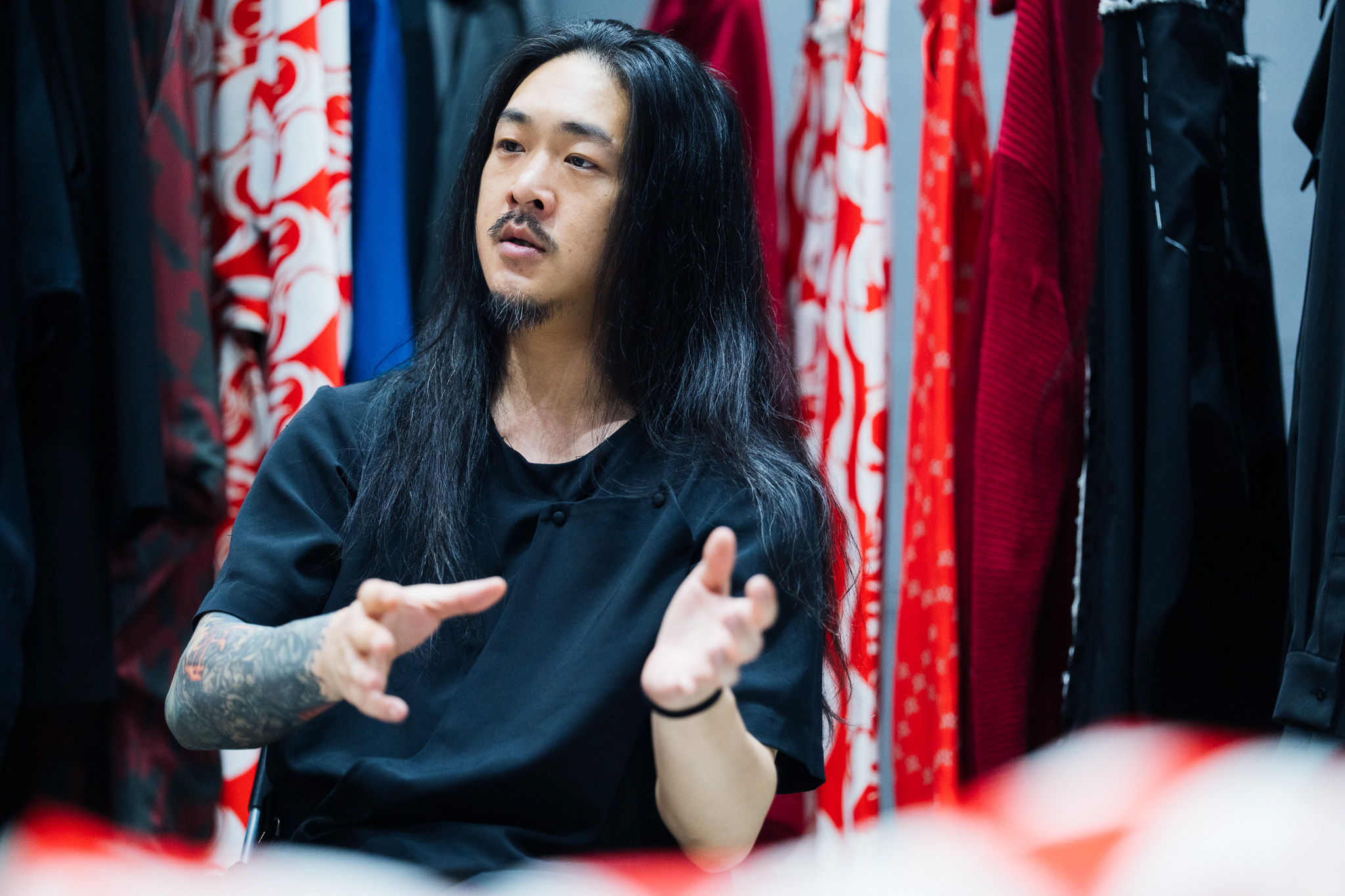
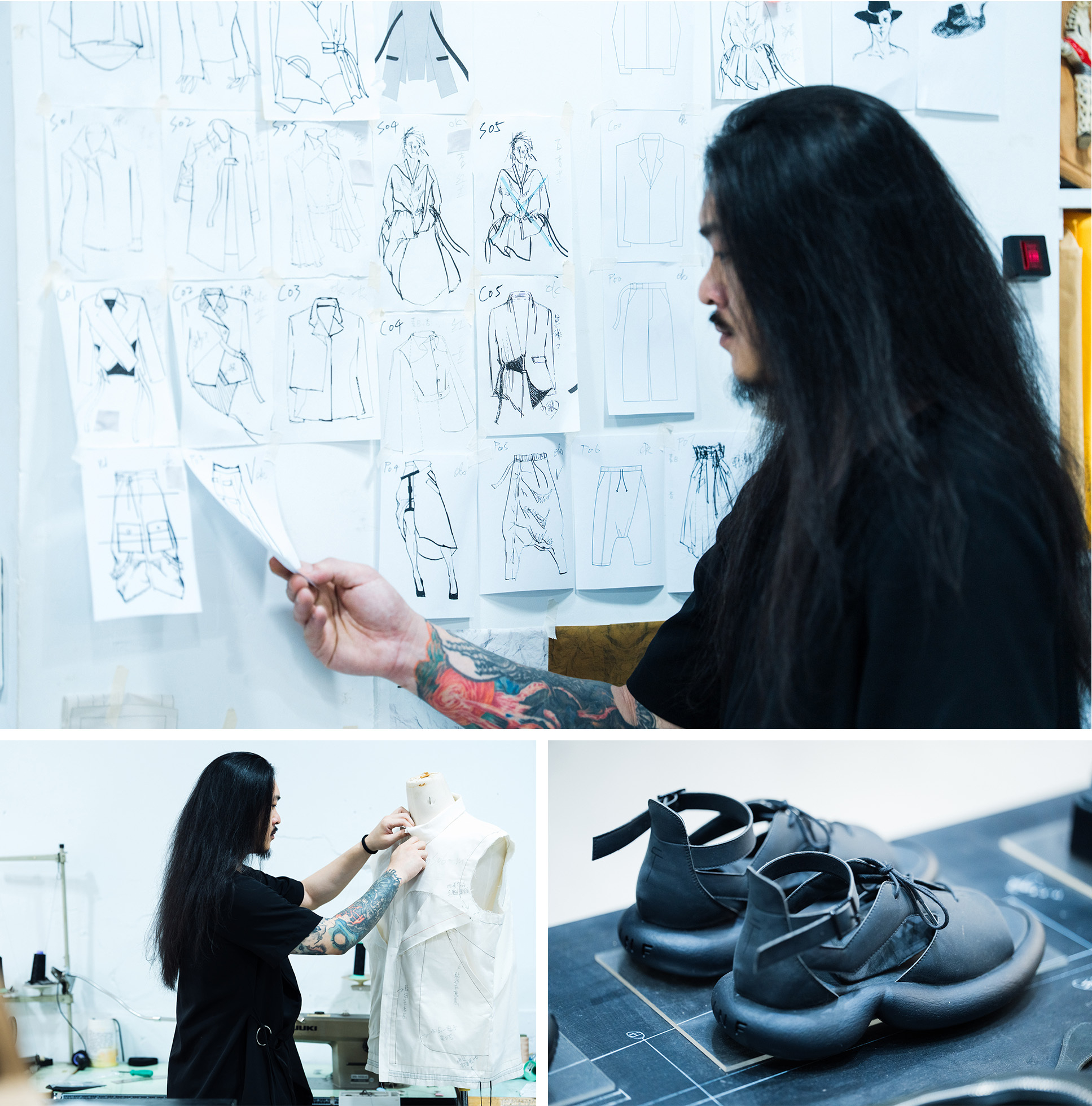
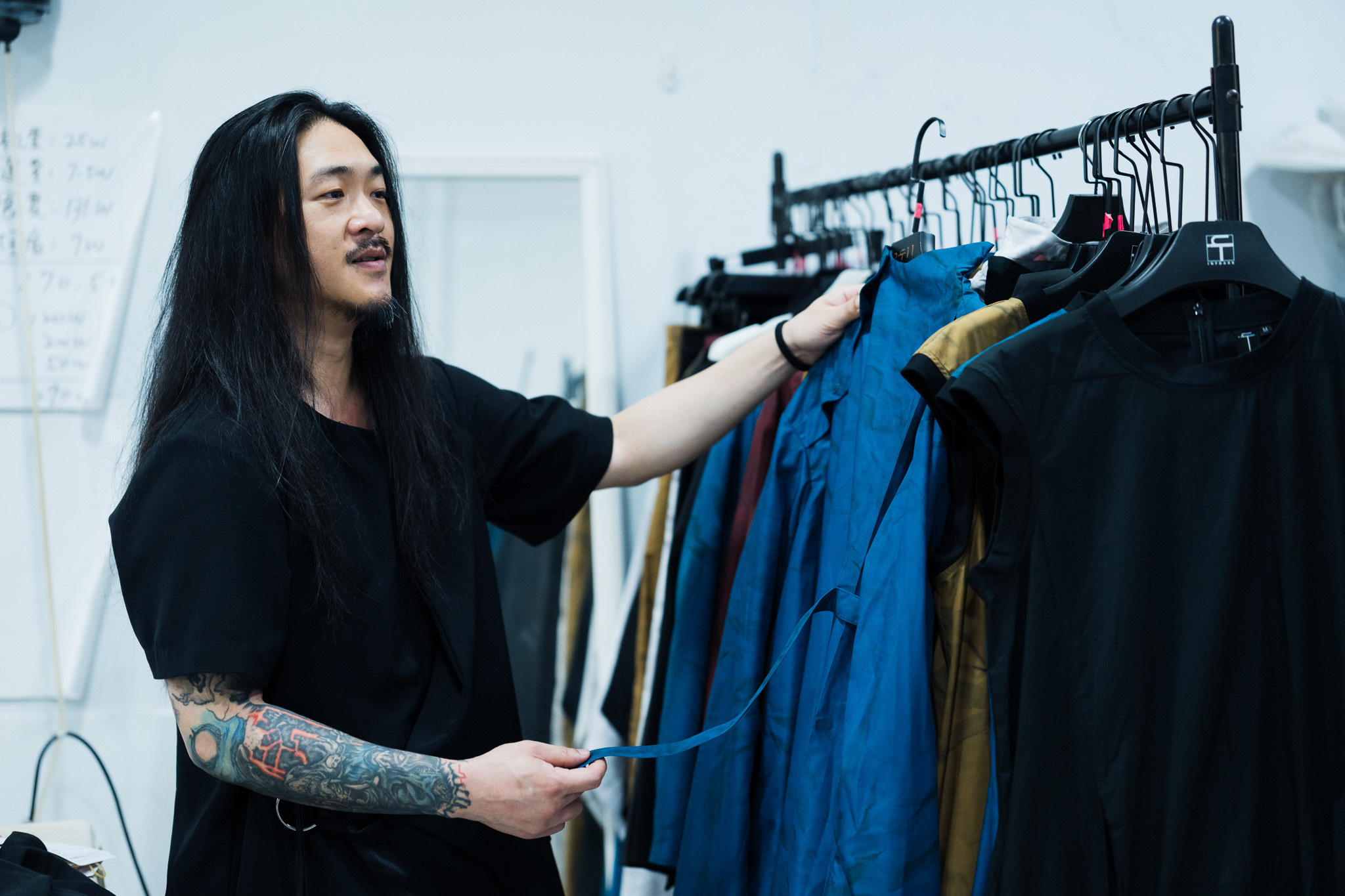
INFDARK brand designer Kuo Wei.
Interestingly, Kuo Wei’s creative process does not begin with “drawing design sketches.” Instead, it begins with “writing stories.” Each season, he constructs a textual framework inspired by extensive reading, life experiences, local culture, or even the everyday. “It is like writing a novel,” he says. “It may be a fictional world, or it may be built upon real culture or lived experience.”
Only after the story emerges does Kuo begin extending from it into colors, scenes, emotions, character states, or fragments of narrative. From there, he imagines how these elements might take shape as garments. Through continuous experimentation, patternmaking, and revision, they eventually become the clothes that appear on the runway. The physical show itself is the state closest to the story.
Yet he retains a certain mystery that belongs to the author. He admits that apart from himself, no one on the team knows the full plot. “It is not always necessary to tell the story completely. A fashion show itself is a form of performance art, and it presents the overall spirit in a more concentrated way.”
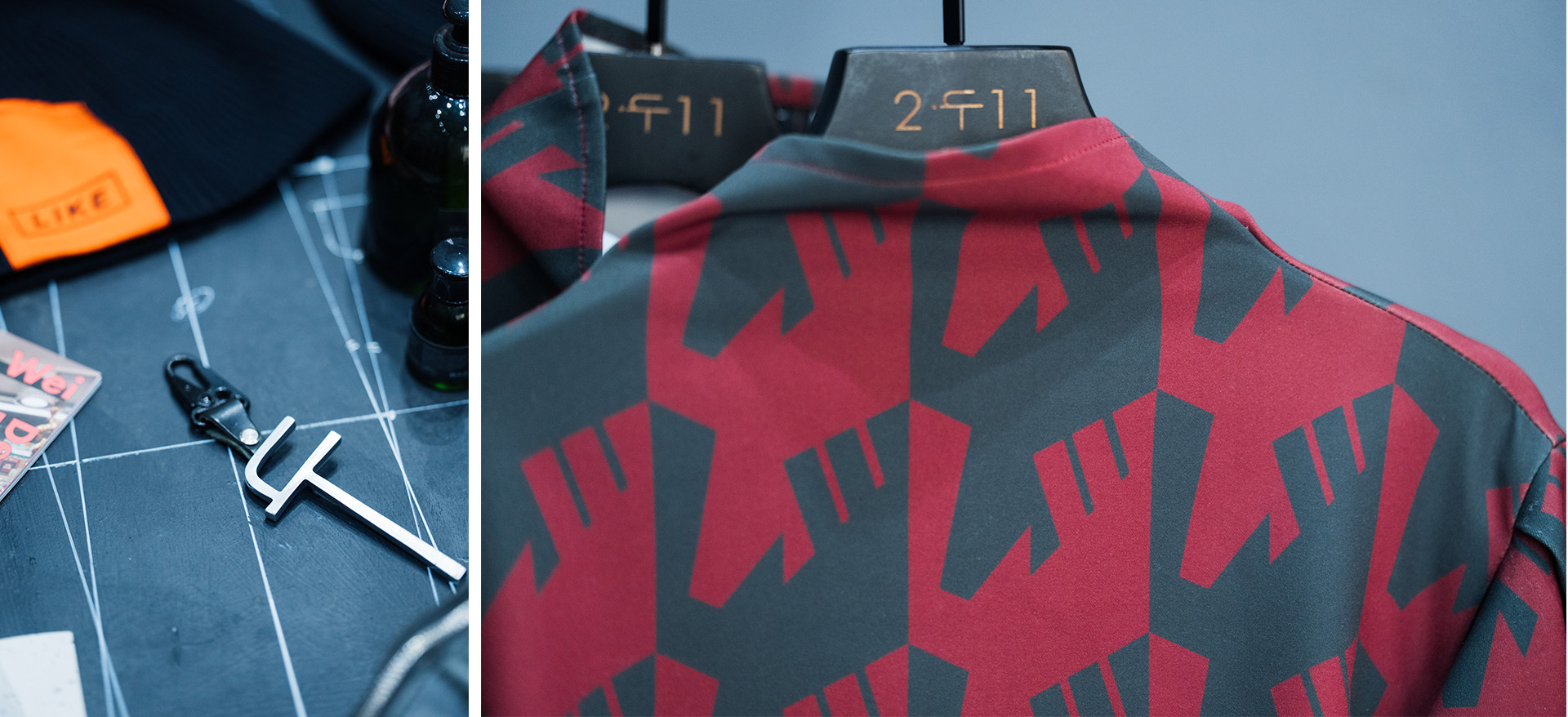
INFDARK takes its name from the French phrase meaning “infinite black.” Behind each of the brand’s designs lies a textual framework.
Structure, Culture, and Sustainability as the Brand’s Triangular Design Core
If asked to define INFDARK through a few key words, Kuo Wei’s answer would be: structure, culture, and sustainability. The three may appear independent from one another, but in reality, they form an interrelated triangular core.
Structure is INFDARK’s most important design language. Kuo is never satisfied with working only through decoration or silhouette. Through patternmaking, he creates the possibility of garments that can “cross product categories” and be “worn in multiple ways.” This is not limited to simple forms such as detachable sleeves or trousers that can become shorts. Instead, a bag can transform into a T-shirt, while a cropped top can become an open-back dress. Garments genuinely generate another form through structural transformation.
This transformation is not a display of technical virtuosity. It is closely tied to sustainability. Kuo believes that from the very beginning of the design process, one should think about how to give each item a longer life cycle, rather than waiting until resources have already been consumed before discussing recycling. The multifunctionality of clothing naturally allows it to accompany its owner for a longer period of time.
The sustainability advocated by INFDARK does not refer merely to the choice of specific materials, but to a deeper consideration of modes of use, relationships with wearing, and the lifespan of clothing.
“What I care about is how to allow a single item to ‘cross product categories.’ This kind of transformation is not achieved through surface-level components, but through patternmaking.”— Designer Kuo Wei
INFDARK continues to question “structure” and “the essence of clothing” through its consistent concepts of multi-way wear and deconstruction-based reconstruction. Embedded within this approach is Kuo Wei’s perspective on sustainability. For this season, in response to the needs of European and American markets, the fabrics have all been adjusted to natural materials. Yet beyond materials, the brand’s thinking around design logic and material selection is in fact a deeper consideration of modes of use, relationships with wearing, and the lifespan of garments.
Culture is another major element supporting the brand. INFDARK has repeatedly drawn inspiration from Taiwanese culture, translating elements such as spirit medium rituals, ama divers, and Indigenous motifs into modern fashion language. However, Kuo does not see culture as material to be directly appropriated. Instead, he approaches it more like a psychological structure that must be excavated in depth.
Only by avoiding superficial treatment and preventing culture from becoming a flat symbol can it be transformed into a narrative with weight.
“When we present overseas, we often encounter customers who actively ask to understand the design story and the ideas behind it,” he shares. “For them, wearing a garment with a story is itself an experience worth sharing.”
“If clothing is merely beautiful, it can easily be replaced. But if there is a story and cultural context behind it, the wearer can understand it, and may even be willing to share the values behind it.”— Designer Kuo Wei
Culture is also an essential element in shaping the soul of INFDARK. Throughout its history, the brand has often drawn inspiration from Taiwanese and global cultures, translating various motifs into modern fashion language.
Destruction First, Transition Next, and Finally Revival: Emerging Anew After the End
In the Fall/Winter 2026 collection ECLOSION, Kuo Wei turns his narrative gaze toward the “evolutionary process of fashion.” The title refers to “hatching” or the emergence of an insect from its former state. It explores not only the transformation of clothing itself, but also the transformation of culture, worldview, and even the human condition.
“I have always cared about where clothing begins, and how it is pushed into its next state,” Kuo explains. “So ECLOSION is not simply about how a garment is completed. It is about the process that takes place before and after clothing is finished — even the process it undergoes between collapse and reconstruction.”
“Through the relationship between clothing and the body, we hope to raise a more fundamental question: when order collapses and form loses its function, does clothing still need to be defined? Or is it itself a continuously generative process?” — Designer Kuo Wei
From this point of departure, the visual language of the collection points toward a world that continues to operate after the collapse of civilization, constructing silhouettes reminiscent of a wasteland setting. In terms of cutting, the works extend and vary across different looks, moving progressively through levels of structural complexity and consumer accessibility.
The garments are divided into a three-stage evolutionary process, which also reflects contemporary thinking on sustainability and flexible value. The palette is primarily composed of earth tones close to the landscape, moving from beige and ochre red to grayish green-blue and white, creating an atmosphere in which traces of life still remain after the apocalypse.
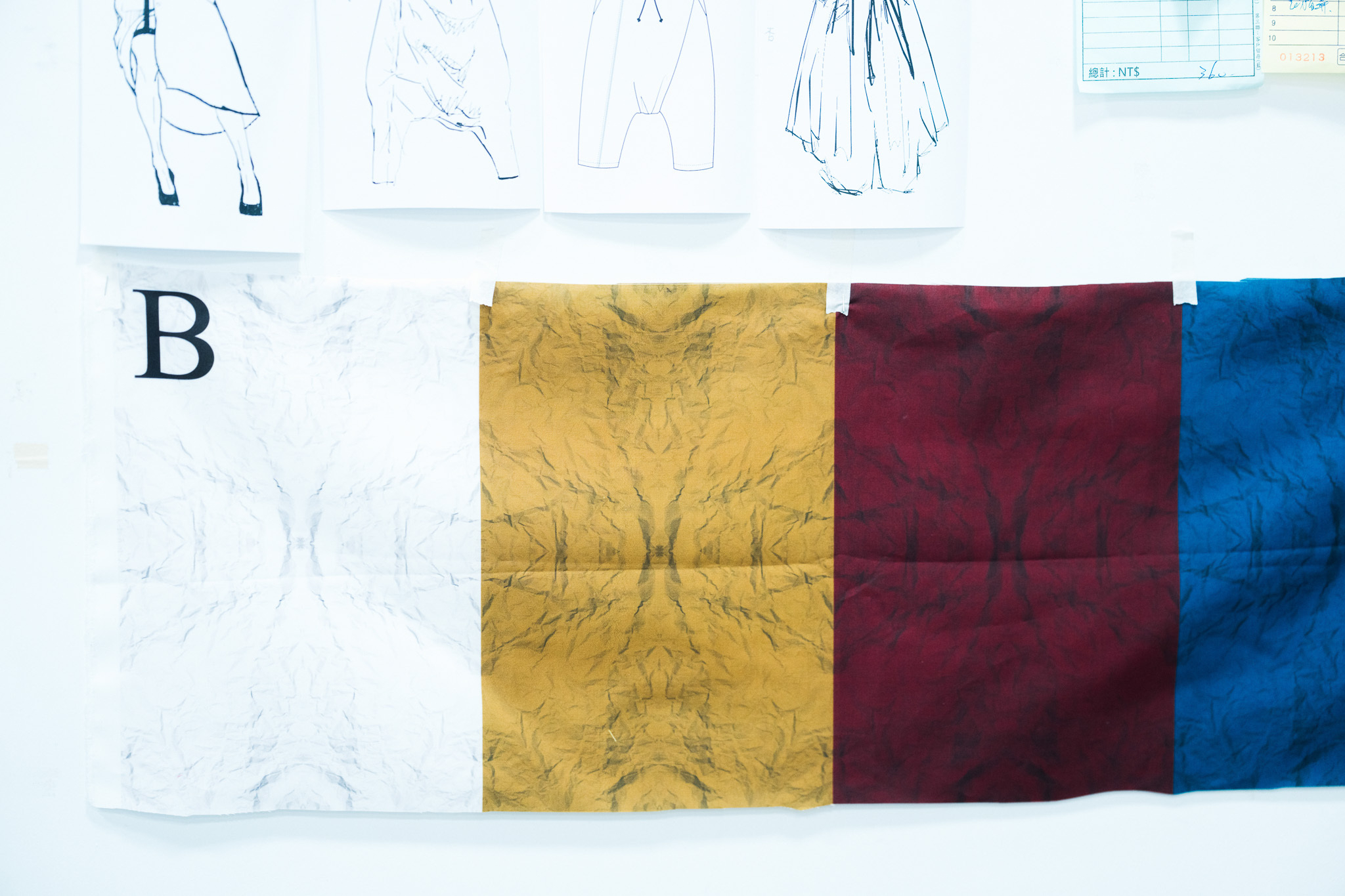
This season, INFDARK divides the garments into a three-stage evolutionary process. The palette is primarily composed of earth tones close to the landscape, allowing the overall visual language to construct a world that continues to function after the collapse of civilization.
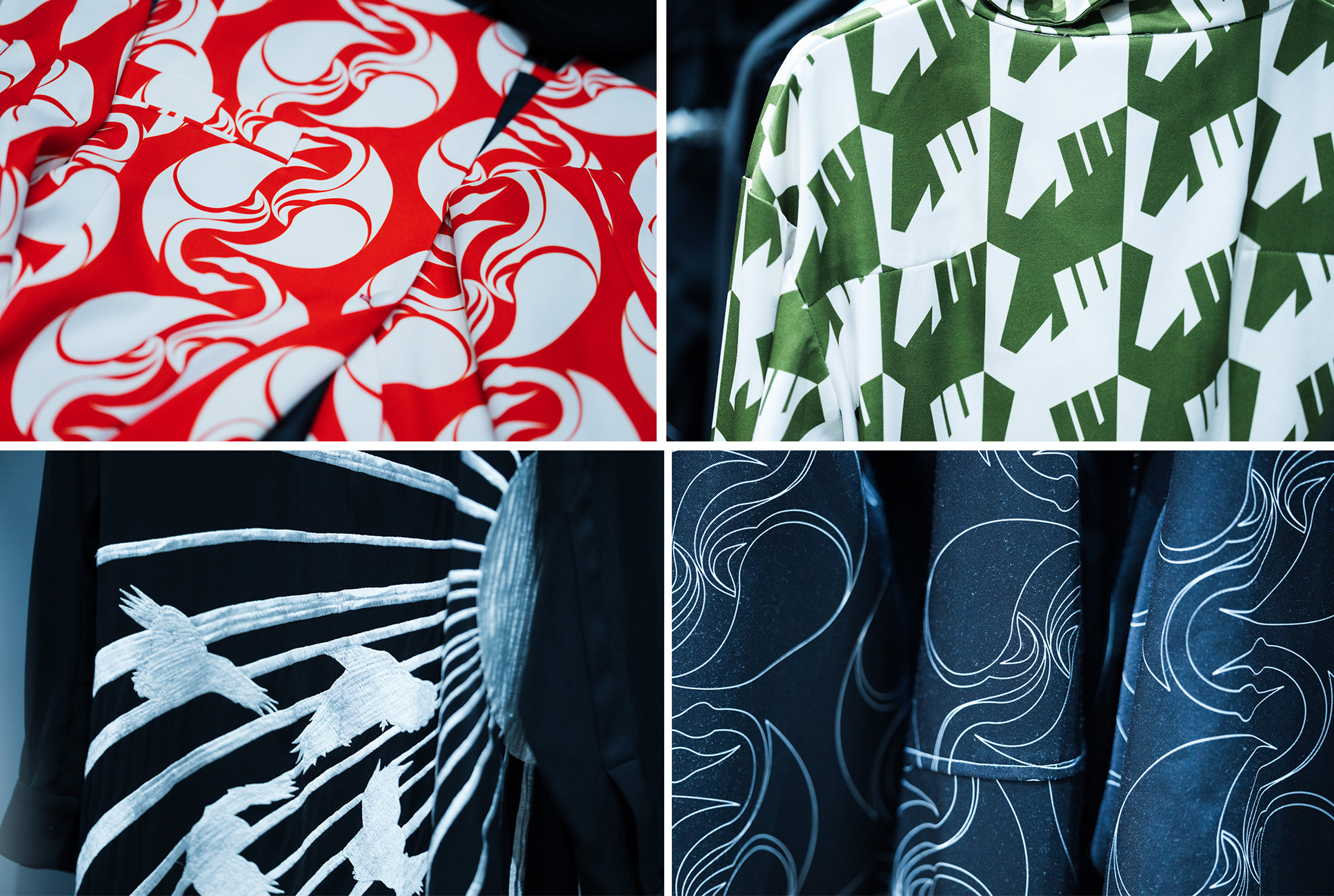
At the same time, beneath the seemingly rough surface textures of the garments, INFDARK continues to maintain precise craftsmanship. Take the print design as an example. For this collection, Kuo traced his perspective back to the initial state of clothing, using crumpled pattern paper as source material. Through repeated photography, light-and-shadow testing, and digital recomposition, the paper was ultimately transformed into patterns with an optical illusion effect. The garments retain the primal quality of paper while also carrying the fluidity of fabric.
“The making of clothing begins with drawing on pattern paper, and we then transform that paper into the visual surface of the garment,” he says. “It looks like an outcome, but in fact it returns to the starting point. Everything keeps cycling, transforming, and regenerating.”
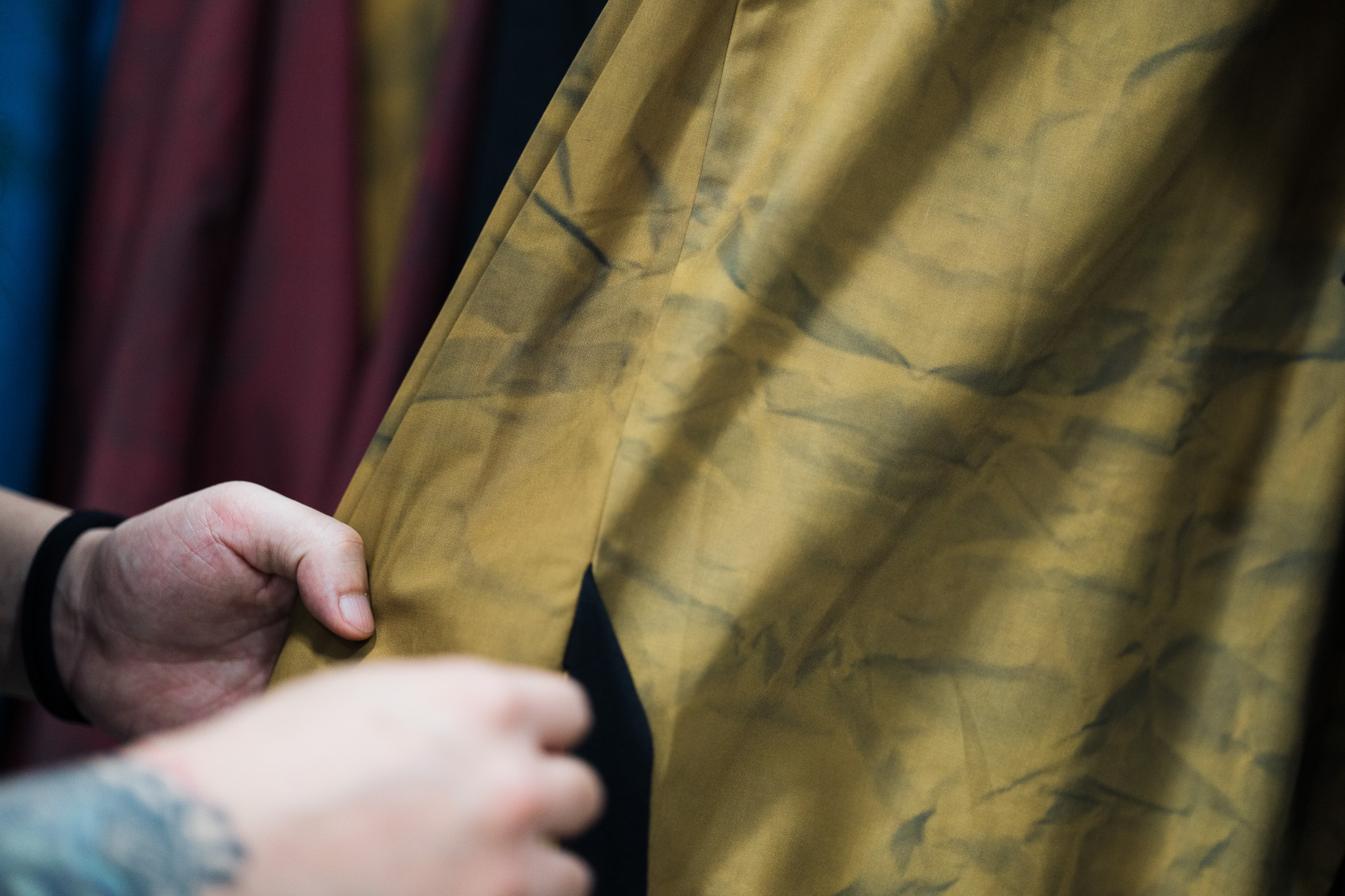
The print design of ECLOSION is drawn from crumpled pattern paper, symbolizing repeated revision and reconstruction within the design process, while also pointing to the multiple possibilities that exist before clothing takes its final form.
On the Taipei Fashion Week AW26 runway, INFDARK also clearly conveyed a post-apocalyptic atmosphere through its runway presentation. When existing systems continuously replicate themselves and move toward stagnation, “the apocalypse” becomes a metaphor for the collapse of old orders. Behind this lies Kuo Wei’s observation that the contemporary fashion industry is gradually losing its creativity, as well as his hope for a vitality as resilient as new greenery.
“Although the world situation, the fashion industry, and society as a whole may not necessarily be optimistic, people may still be able to walk back toward a path of their own. For me, the post-apocalypse is not an ending, but a state in which something begins to grow again.” — Designer Kuo Wei
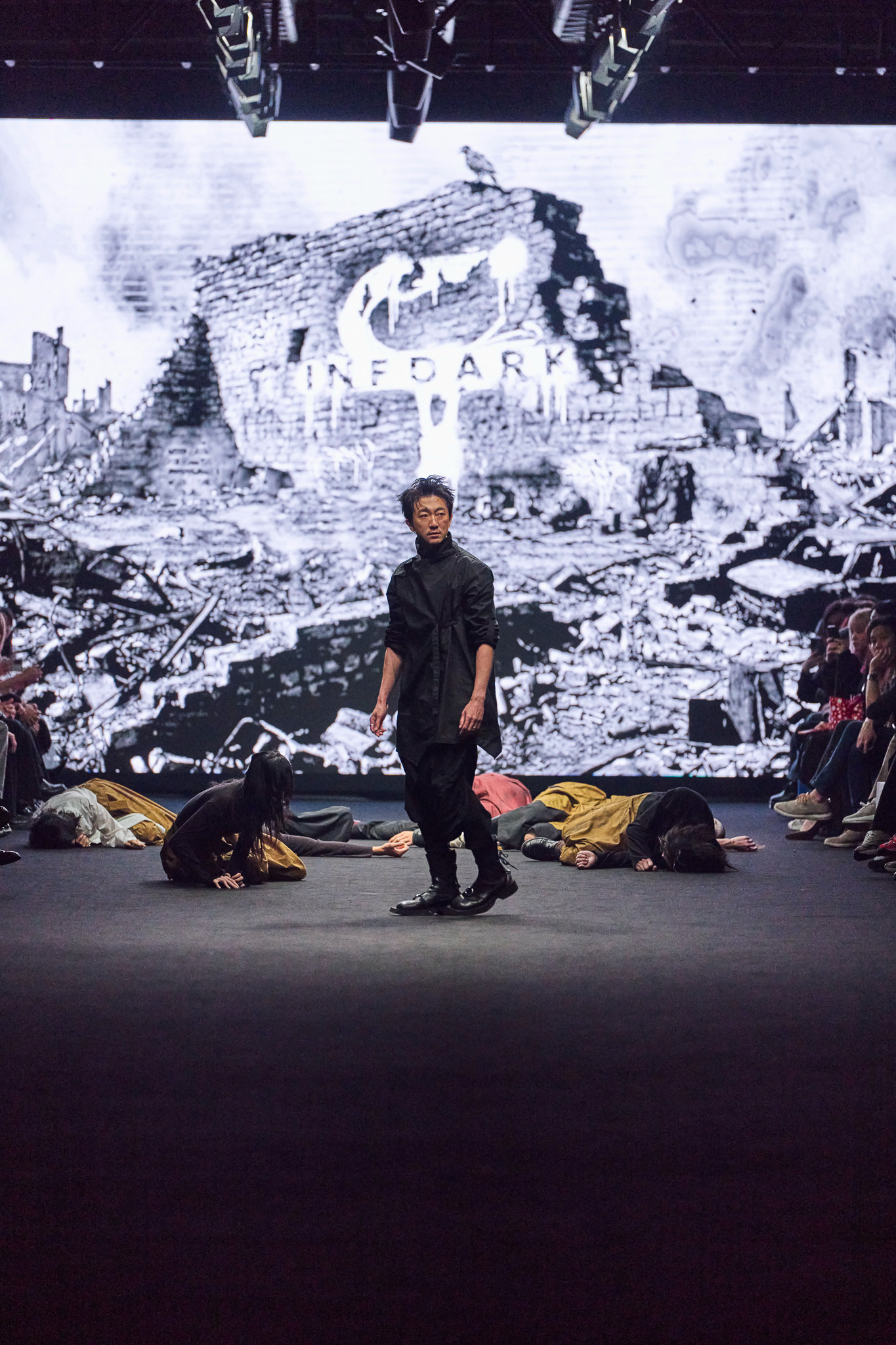
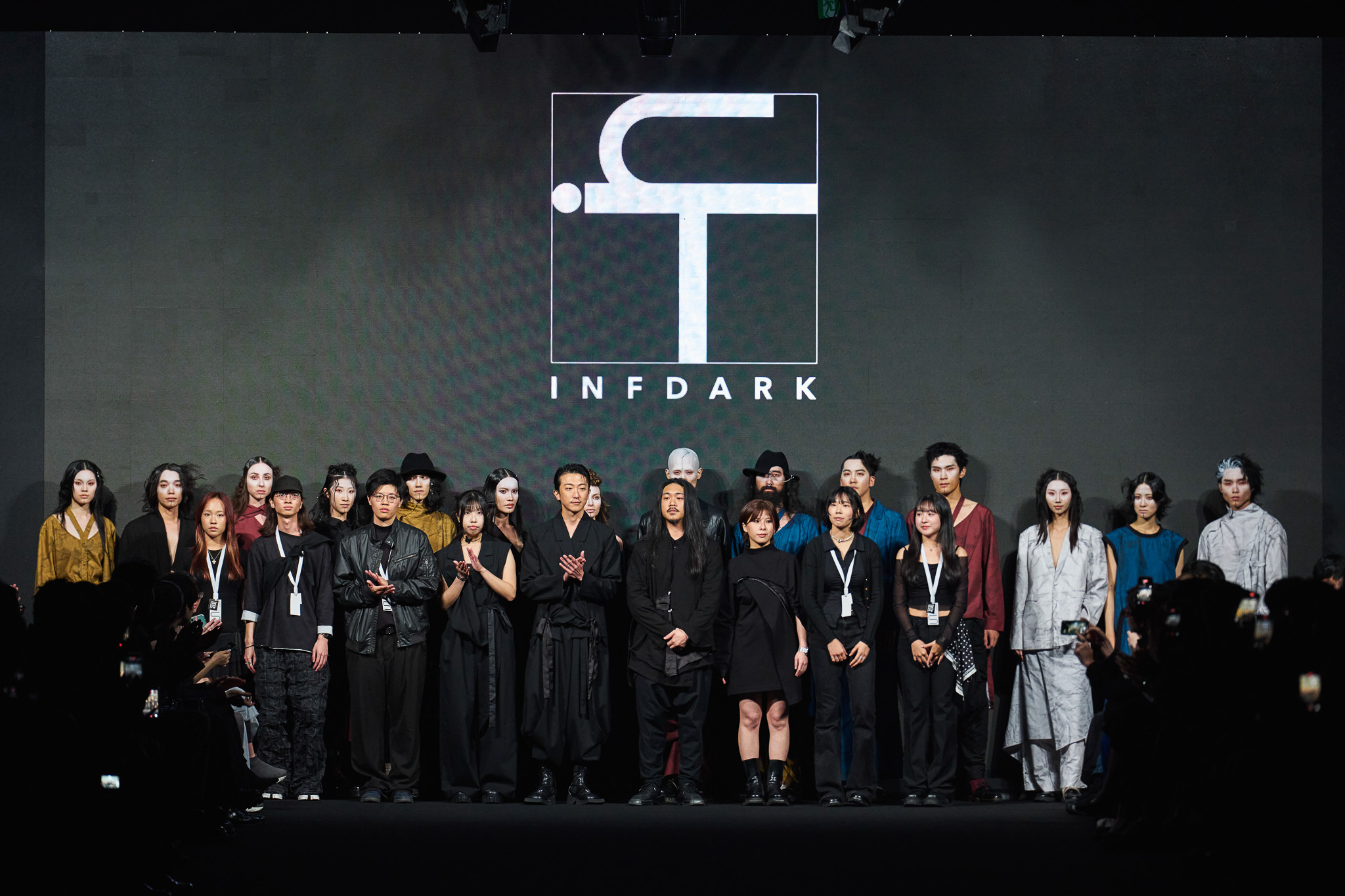
At the Taipei Fashion Week AW26 show, INFDARK opened with artist and singer Harry Chang as the opening figure, joined by numerous models in a vivid collective performance that transformed the runway into an immersive narrative of survival after the apocalypse. Photo courtesy of INFDARK.
INFDARK has often left a strong impression through short-film-like presentations or distinctive runway movement. In this show, the first part unfolded through an oppressive and destructive atmosphere. Through sound, imagery, and body language, the audience was made to feel a state of disorder and stagnation.
With the explosive impact of a meteor strike and disaster news footage opening the show, models appeared as if they were caught in the midst of an apocalypse: wounded, collapsing collectively to the ground. Later, they slowly stood up, began to walk again, and finally restored warmth through gentle embraces. Through video, sound, lighting, model movement, and the sequence of garments, INFDARK constructed a post-apocalyptic situation in which collective emotion could move forward together.
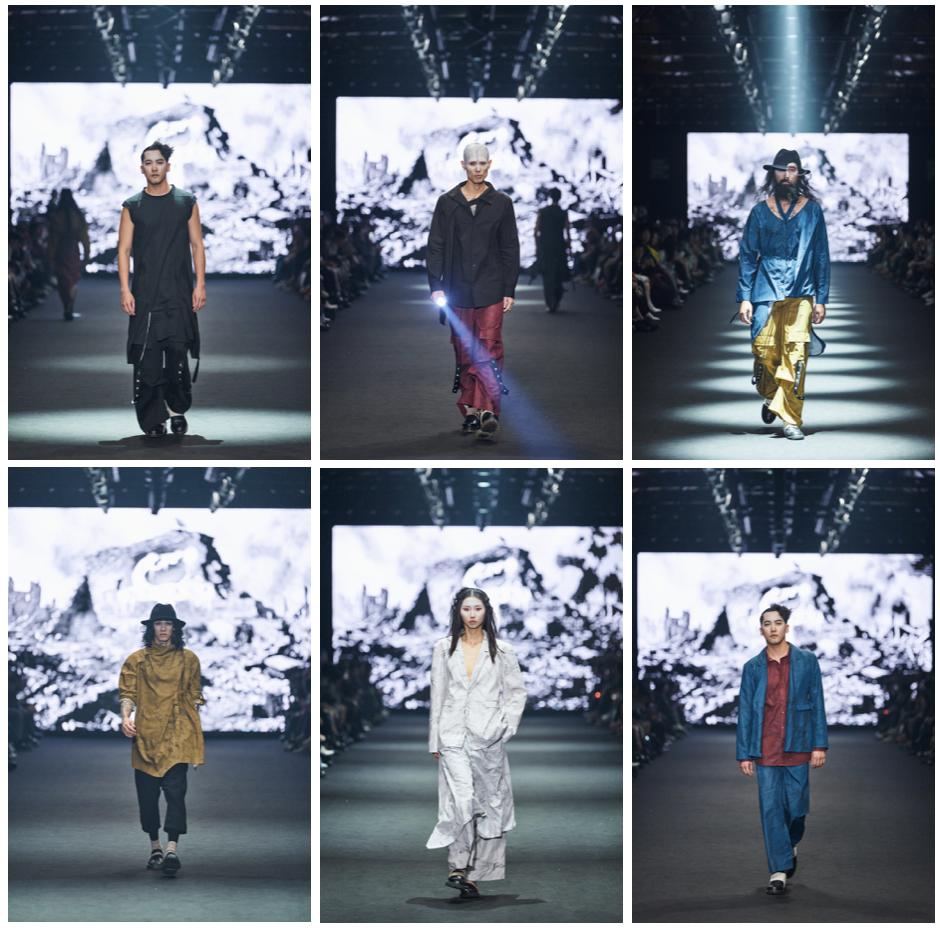
The ECLOSION show combined survival props, situational makeup, and other details to convey a post-apocalyptic setting. The collection focuses on the “evolutionary process of fashion.” The first stage begins with simple, easy-to-style, market-friendly entry-level pieces; the second stage incorporates the brand’s classic structural design elements, offering recognizability while remaining accessible; the third stage develops into INFDARK’s signature deconstructed and transformable designs, forming the core series created for loyal supporters of the brand. Photo courtesy of INFDARK.
Continuing to See New Futures Through Constant Transformation
Just as the AW26 collection develops different evolutionary axes of clothing in response to its theme and to different audiences, Kuo Wei, as both designer and brand operator, is highly aware of the tension between art and commerce. He does not believe that the two are necessarily opposed. Rather, he sees the need to establish clear categories and boundaries.
For INFDARK, different product lines correspond to their own logic. Printed pieces carry cultural stories and visual intensity, and their silhouettes are usually relatively simple. Black, white, or solid-colored pieces, on the other hand, focus on structure, cutting, and detail, responding to customers who prefer more complex styling. This division is not a compromise with the market, but a way of allowing different products to serve different needs while preserving the brand’s core.
Kuo also shares that, based on the brand’s international exhibition experience, Taiwan’s fashion industry might consider referencing the model of London Fashion Week, in which runway shows, presentations, digital showcases, brand events, and retail-linked areas are more finely distinguished. This would allow brands of different scales to find formats suited to their own modes of presentation, while enabling fashion week to extend beyond the runway and become a citywide cultural event and platform for exchange.
With extensive international exhibition experience, INFDARK hopes to continue expanding into new directions and goals, allowing more people to see another possibility between Taiwanese culture and contemporary fashion through clothing.
In the blueprint envisioned by Kuo Wei, INFDARK has never been as simple as just making clothes. It is more like a system capable of carrying different cultures, identities, and states of being. “I want to make it more complete,” he says, “and allow more people to see another possibility between Taiwanese culture and contemporary fashion through clothing.” He naturally hopes that INFDARK can continue to propose new directions and goals, rather than remaining within previously successful models.
“The fashion industry today easily replicates itself,” he says. “I think what designers should do is propose new directions for the next era. In the future, I also hope to develop more cross-disciplinary collaborations, including moving image, performance, material technologies, and even more complete cultural narratives.” As for the brand’s next step? Kuo laughs and says that although the Fall/Winter 2026 season has only just been presented, the Spring/Summer 2027 season is already waiting ahead.
“That is the reality of running a brand. You have to keep moving forward.”
▐ Interview & Writing / Ian Liu
▐ Editor & Coordinator / Irene Lin
▐ Interview Photography / Shouya Sung
About the Brand|INFDARK
With culture as its foundation and fashion as its medium, INFDARK transforms Taiwanese traditional culture into garment language each season. The brand combines deconstructed tailoring with architectural thinking to create transformable, multi-way-wear collections. By recomposing the characteristics of menswear and womenswear, INFDARK shapes a gender-neutral philosophy and redefines dark fashion through sustainable design.
About the Designer|Kuo Wei
A graduate of the Department and Graduate Institute of Fashion Design at Shih Chien University, designer Kuo Wei is skilled at observing subtle changes and expressing layers through details in fashion design. Specializing in deconstruction, he deftly merges two contrasting or conflicting cultures, dismantling and reconstructing them while embedding cultural spirit and meaning within the work. Through this approach, he creates fashion pieces that traverse past and present.
● Brand Website: https://www.infdark.com/
● Contact: Infdark.en@gmail.com